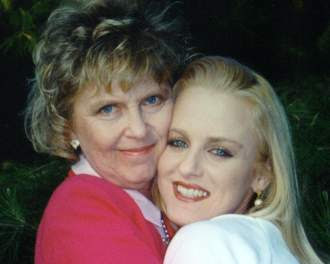
Welcome to my Catholic apologetics blog! Apologetics is the defense of the Catholic faith. I will use Sacred Scripture, the Catechism, and Tradition to discuss areas of concern within the Catholic Church and Her teachings, as well as reasons why the Catholic Church was founded by Jesus. I will always stay true to the Magisterium, the teaching authority of the Church. This page is not authorized, reviewed, or approved by the Magisterium. Your Questions are always welcome.

Showing posts with label Jesus. Show all posts

Sunday, July 26, 2009

Why do Catholics Worship Idols?


I would like to again invite you to add to this and ask any questions you would like. Remain civil, keep it clean, and be nice. I would like you to post any sources that you use. I will use Sacred Scripture and Sacred Tradition to make my point. I will look to the early Fathers of the Church and the road map to what the Catholic Church actually believes, the Catechism of the Catholic Church. I hope as you read this you will see a new light on what the Church teaches.

To start this post, the Catechism teaches Catholics that, “The first commandment condemns polytheism. It requires man neither to believe in nor to venerate, other divinities than the one true God. Scripture constantly recalls this rejection of "idols, [of] silver and gold, the work of men's hands. They have mouths, but do not speak; eyes, but do not see." These empty idols make their worshippers empty: "Those who make them are like them; so are all who trust in them." God, however, is the "living God" who gives life and intervenes in history.

Idolatry not only refers to false pagan worship. It remains a constant temptation to faith. Idolatry consists in divinizing what is not God. Man commits idolatry whenever he honors and reveres a creature in place of God, whether this be gods or demons (for example, satanism), power, pleasure, race, ancestors, the state, money, etc. Jesus says, "You cannot serve God and mammon." Many martyrs died for not adoring "the Beast" refusing even to simulate such worship. Idolatry rejects the unique Lordship of God; it is, therefore, incompatible with communion with God.

Human life finds its unity in the adoration of the one God. The commandment to worship the Lord alone integrates man and saves him from an endless disintegration. Idolatry is a perversion of man's innate religious sense. An idolater is someone who "transfers his indestructible notion of God to anything other than God." (Catholic Church, 2000, 2112-2214).

Ok, now what does all of that mean to the average Catholic, and to the average non-Catholic. Let's start with the question of polytheism. As a Catholic, I have been taught in the church and through catechism teaching that we are to have only one God. We are never taught to “worship” a photo or statue. Yes, as a Catholic I have used a painting or statue to help me as I pray. I would liken this to a person looking at a photo album and recalling a cherished memory of a loved one. Is this person practicing ancestor worship? No, they are just being reminded of the good times they spent with a loved one. As a Catholic, I see that by looking at an image of the passion of Christ I am able to truly see and that I can start to understand the suffering that Jesus went through for me. By seeing images of the saints I have studied I can recall the events in their lives that I would want to imitate.

We have seen what the Church teaches about Idolatry and what the Catechism teaches. What does Holy Scripture say on the subject? I think we need to look at a few key passages that cover this area. I think the best place is in Exodus Chapter 20 verses 3-5, You shall not have other gods besides me. You shall not carve idols for yourselves in the shape of anything in the sky above or on the earth below or in the waters beneath the earth; you shall not bow down before them or worship them. For I, the LORD, your God, am a jealous God, inflicting punishment for their fathers' wickedness on the children of those who hate me, down to the third and fourth generation. This is very clear is it not? We are not to make an image and worship it as a god. God wants us to worship only him. If you are to read into exodus you find God letting Moses know that the people of Israel are making a graven image and are sinning against him. God Saw that his people still needed guidance. He even went as far as to have the Hebrew people perform sacrifices on the animals that the people of Egypt worshiped as gods. This was to show the Israelis that the gods of Egypt were impotent. So, does this forbid any icons or images for worship? If we are to “search the scriptures” (John 5:39) again we can find some things that might make you see this in a different light. We will start again in Exodus Make two cherubim of beaten gold for the two ends of the propitiatory, fastening them so that one cherub springs direct from each end. The cherubim shall have their wings spread out above, covering the propitiatory with them; they shall be turned toward each other, but with their faces looking toward the propitiatory (Ex 25:18-20). God is instructing the Hebrew people how to make Images. If we read on further, we see God tell Moses to make a bronze serpent (statue) and to instruct the people to look at the serpent if they are bitten and they will be healed (Num 21:8-9). They kept that statue until some tried to give it a name and worship it as a god named “Nehushtan” and at that time King Hezekiah (cf 2Kgs 18:4) had it destroyed (Catholic Answers 2006).

Now we see how God gave the Hebrews a tool to use to help them and once this was abused by the people there was someone to step up and destroy the problem. So, we can see that God has directed his followers to make icons or images. The problem starts when people try to make an image of God. How can we as people do if we have never seen God? We have seen or heard of the Holy Spirit as tongues of flame and descending as a dove. God came to earth as a man his name was Jesus. Men were able then to see God as man. So, when a Protestant has an image of a flame or a dove on their car does this make them an idolater? When a Christian kneels down to read the bible are they worshiping the Word, the bible? The answer to both of these is a resounding no. When a Catholic kneels to pray in front of an image of Jesus does this make him an idolater? Again, we hear a resounding NO.

To end this discussion I will invite you to go to Catholic Answers and read “Do Catholics Worship Statues?” This is a great resource. Catholic Answers can answer this question and more.

References

        Catholic Church. (2000). Catechism of the Catholic Church: revised in accordance with the official Latin text promulgated by Pope John Paul II. United States Catholic Conference.

        Catholic Answers. (2006). The Essential Catholic Survival Guide. Catholic Answers.


Monday, June 15, 2009

How to Practice Lectio Divina

A step-by-step guide to praying the Bible
BY: Father Luke Dysinger, O.S.B.
Lectio divina is a slow, contemplative praying of the Scriptures. Time set aside in a special way for lectio divina enables us to discover in our daily life an underlying spiritual rhythm. Within this rhythm, we discover an increasing ability to offer more of ourselves and our relationships to the Father, and to accept the embrace that God is continuously extending to us in the person of his son, Jesus Christ. Very often our concerns, our relationships, our hopes and aspirations, naturally intertwine with our meditations on the Scriptures. We can attend "with the ear of our hearts" to our own memories, listening for God's presence in the events of our lives. We experience Christ reaching out to us through our own memories. Our own personal story becomes salvation history.How to Practice Lectio Divina
· Choose a text of the Scriptures that you wish to pray. Many Christians use in their daily lectio divina one of the readings from the eucharistic liturgy for the day (find the readings here); others prefer to slowly work through a particular book of the Bible. It makes no difference which text is chosen, as long as one has no set goal of "covering" a certain amount of text. The amount of text covered is in God's hands, not yours.
· Place yourself in a comfortable position and allow yourself to become silent. Some Christians focus for a few moments on their breathing; others have a beloved "prayer word" or "prayer phrase" they gently recite.. For some, the practice known as "centering prayer" makes a good, brief introduction to lectio divina. Use whatever method is best for you and allow yourself to enjoy silence for a few moments.
· Turn to the text and read it slowly, gently. Savor each portion of the reading, constantly listening for the "still, small voice" of a word or phrase that somehow says, "I am for you today." Do not expect lightning or ecstasies. In lectio divina, God is teaching us to listen to him, to seek him in silence. He does not reach out and grab us; rather, he gently invites us ever more deeply into his presence.
· Take the word or phrase into yourself. Memorize it and slowly repeat it to yourself, allowing it to interact with your inner world of concerns, memories, and ideas. Do not be afraid of distractions. Memories or thoughts are simply parts of yourself that, when they rise up during lectio divina, are asking to be given to God along with the rest of your inner self. Allow this inner pondering, this rumination, to invite you into dialogue with God.
· Speak to God. Whether you use words, ideas, or images--or all three--is not important. Interact with God as you would with one who you know loves and accepts you. And give to him what you have discovered during your experience of meditation. Experience God by using the word or phrase he has given you as a means of blessing and of transforming the ideas and memories that your reflection on his word has awakened. Give to God what you have found within your heart.
· Rest in God's embrace. And when he invites you to return to your contemplation of his word or to your inner dialogue with him, do so. Learn to use words when words are helpful, and to let go of words when they no longer are necessary. Rejoice in the knowledge that God is with you in both words and silence, in spiritual activity and inner receptivity.Sometimes in lectio divina, you may return several times to the printed text, either to savor the literary context of the word or phrase that God has given or to seek a new word or phrase to ponder. At other times, only a single word or phrase will fill the whole time set aside for lectio divina. It is not necessary to assess anxiously the quality of your lectio divina, as if you were "performing" or seeking some goal. Lectio divina has no goal other than that of being in the presence of God by praying the Scriptures. Lectio Divina as a Group ExerciseIn the churches of the Third World, where books are rare, a form of corporate lectio divina is becoming common, in which a text from the Scriptures is meditated on by Christians praying together in a group.This form of lectio divina works best in a group of between four and eight people. A group leader coordinates the process and facilitates sharing. The same text from the Scriptures is read out three times, followed each time by a period of silence and an opportunity for each member of the group to share the fruit of her or his lectio. The first reading is for the purpose of hearing a word or passage that touches the heart. When the word or phrase is found, the group's members take it in, gently recite it, and reflect on it during the silence that follows. After the silence, each person shares which word or phrase has touched his or her heart.The second reading (by a member of the opposite sex from the first reader) is for the purpose of "hearing" or "seeing" Christ in the text. Each ponders the word that has touched the heart and asks where the word or phrase touches his or her life that day. Then, after the silence, each member of the group shares what he or she has "heard" or "seen."The third and final reading is for the purpose of experiencing Christ "calling us forth" into doing or being. Members ask themselves what Christ in the text is calling them to do or to become today or this week. After the silence, each shares for the last time, and the exercise concludes with each person praying for the person on the right of him or her.Those who regularly practice this method of praying and sharing the Scriptures find it to be an excellent way of developing trust within a group. It also is an excellent way of consecrating projects and hopes to Christ before more-formal group meetings.

Tuesday, June 9, 2009

Abortion Survivor Sarah Smith

Pictured here are Sarah Smith and her mother, Betty. In 1970, Betty tried to abort Sarah in Los Angeles. At the time, Betty did not know she was pregnant with twins. One baby was aborted, but miraculously, Sarah survived. Sarah has forgiven her mother -- and for five years, they traveled the world speaking together about the pain and suffering caused by abortion. Below is Sarah's story, followed by the speech she gave in Rome in 1996.

Powerful Video Offered: At the end of this article, you will find details about how to receive a copy of a video that tells Sarah's amazing story.
Twins -- one aborted, one survives!
Sarah tells her story . . .
"Twenty-nine years ago, my mother decided to have an abortion. At the time, she was pregnant with twins, but nobody knew this, not even her doctor. My tiny brother and I were both there growing in her womb, until that dreadful day. Before the abortion, we were both alive. Moments later, I was alone.

It's frightening to think I was almost aborted when my mom had a D&C abortion. Somehow, miraculously, I survived! My twin brother wasn't so lucky. Andrew was aborted, and we lost him forever.

Several weeks later, my mother was shocked to feel me kicking in her womb. She already had five children, and she knew what it felt like when a baby kicked in the womb. She instantly knew that somehow she was still pregnant. She went back to the doctor and told him she was still pregnant...that she had made a big mistake and that she wanted to keep this baby.
To this day, my mother deeply regrets that abortion. I know the pain is unbearable for her at times when she looks at me and knows she aborted my twin brother. Mom says, 'The protective hand of Almighty God saved my life . . That God's hand covered and hid me in her womb, and protected me from the scalpel of death.

After surviving the abortion, I was born with bilateral, congenitally dislocated hips and many other physical handicaps. Nine days after I was born, I was taken to an orthopedic surgeon who applied a cast to each of my tiny legs. My mom would remove these casts with pliers every Monday morning and take me to the doctor to have new casts put on.

At six weeks, I was put into my first body cast. Many surgeries and body casts followed over the next few years. Unfortunately, doctors are telling me that now I'll need surgeries about every 5 years (please pray for me).

Today, I thank God I survived the abortion, but the pain continues for everyone in my family. In memory of my brother Andrew, we bought a memorial gravestone and placed it in a cemetery in Southern California.
It reads:
ANDREW JAMES SMITH, TWIN BROTHER OF SARAH -- IN OUR HEARTS YOU'LL ALWAYS BE ALIVE -- NOVEMBER 1970
Please share our story with others so the tragedy of abortion stops hurting babies and families. Everyone needs to know the truth about abortion. Thank you."
--Sarah Smith

Sarah can help you save babies!
Order Sarah's Powerful Video . . .
After surviving her mother's abortion in 1970, Sarah Smith has become one of the most powerful pro-life voices in the battle against abortion. Sarah's stirring testimony touches hearts, changes minds, and saves lives. Sarah wants to help you make a difference in your community. Please order Sarah's video today and share it with people at churches, schools, rallie,s and conferences in your community.

This powerful 10-minute documentary was produced by the 700 Club -- and it's one you'll never forget. You'll see Sarah as a baby crawling in a body cast, then as a teenager, and later as a dynamic public speaker who travels the world exposing the pain and suffering caused by abortion. When you see Sarah, you're seeing the face of a beautiful woman who would not be alive today if the abortionist had completed his "job."

Sarah Meeting Pope John Paul II in April 1996 in Rome.
Sarah's Video - Here's How to Order:
Call Heritage House toll-free at 1-800-858-3040 and mention Pro-Life America's website.
For another article on Sarah Smith & other abortion survivors, click here.

Sarah's Speech In Rome

On April 24, 1996, Sarah Smith gave the following speech at an international pro-life conference in Rome. The conference was called "A Congress for Life." It was organized to celebrate the first anniversary of Pope John Paul II's encyclical letter Evangelium Vitae - The Gospel of Life. The conference was held at the Legionaries of Christ seminary in Rome and was attended by approximately 500 men and women, including pro-life leaders, political leaders, media representatives, priests, and seminarians.
The following is the speech given by Sarah Smith:
"My name is Sarah Smith, and I wish to thank you all, your eminences, and all of the wonderful Legionaries of Christ for allowing us to be with you today. I did not know of the abortion until I was 12 years old. I grew up feeling that I was the same as my friends, except for having numerous surgeries and physical complications. The only difference I felt was an incredible loneliness and a knowledge that something was missing. I never felt whole. I battled with severe depression and found myself dying of anorexia nervosa at age 12, when my mother knew it was time to tell me the truth.

She sat next to me and took my hand and looked me in the eyes and said, "Sarah, you are a twin. I aborted your twin brother and tried to abort you. Please know I did not know what I was doing, and I pray someday you are able to forgive me. I love you and need you to know that you are a welcome part of our family."

At that moment, I knew what I had been missing all my life and that I was called to something much greater than I had knowledge of. Immediately, I felt the overwhelming pain of the knowledge that I should be dead. As I stand before you today, I am painfully aware that this is only possible because my twin brother took a scalpel for me, and I stand in his place and memory, giving him honor and a face.

We have become bombarded with statistics in our fight for life. Thirty-two million babies are killed in the United States alone. Yet everyone had a face, a life, a creator who loved them and created them in His image. As you look at me today, you realize that I am no different than you, yet I stand before you today as a representative of the dead -- a representative of the innocent lives who today may lose their lives. Who will speak for them?

The words of Christ are clear: "What you have done to the least of these you have done unto me." You and I are called and commissioned to care for these little ones just as we would care for Jesus Himself. To walk away and say this is not my problem is to walk away from Jesus Himself.
Many people, upon finding out about the abortion, ask me how I feel, or what can I compare this to. The only thing I can compare my life to is that of an innocent Jew being made to walk down the streets of Germany naked in front of many people and into a room he knows he will never come out of. In my case, unfortunately, the people leading me into that room are my mother and father. Yet the people looking on at the sidelines are people like you. And I ask you today, will you speak up or will you silently look away as another person who needs your help is led to their death?

I have forgiven my parents long ago, as I remember the words Jesus spoke as he hung bleeding and bruised from the cross, "Forgive them Father for they know not what they do." His words pertain to the sins of abortion. Most men and women who involve themselves with abortion don't know what they're doing, as were my parents.

Many women who demand the right to an abortion say, "It's my body, it's my choice." Let me make one thing very clear to you today - my mother's choice was my death sentence. It is not only a woman's body we are discussing in an abortion. It is the entire flesh and blood of someone just like me.

Then we have the issue of medical personnel stating it is just tissue. For anyone who has ever studied biology, you know better. Before any woman even knows she is pregnant, her child already has a beating heart at 20 days. Show me one piece of tissue or cancer you believe must be cut out with a beating heart. Show me a liver or kidney that has its own blood type. That child is perfect from its first day. All it needs is time, oxygen, and nutrition.

Another startling fact is that in medical journals, it states the fetus is capable of feeling pain at 8 weeks of gestation. In America, the vast majority of abortions are performed between 10 to 12 weeks, well after the child can feel the entire procedure. So don't tell me abortion is a simple procedure that expels a piece of tissue and doesn't hurt anybody. I was there. I was less than an inch away from my innocent twin brother when his body was ripped apart, and he felt the entire thing. We were 14 to 16 weeks along in the second trimester. That was how my life was meant to end.

Yet I was spared to stand before you today and tell you on behalf of those who have no voice that if you remain silent, in my country alone, a person just like you and me will die every 20 seconds every day. We have been commissioned by Jesus to speak up for those who cannot speak for themselves, and we have also been commissioned by the Holy Father, who I had the privilege of meeting a few hours ago.

As I told him my story he looked at me so intensely as if to say, "Speak the message! Proclaim the Truth!" And then he kissed me and gave me a blessing to go and speak about life. And that is what he says to all of you as he blesses and kisses us with his Encyclical. Preach the gospel - the good news of life. What is the greatest gift of all? When Jesus outstretched His arms and said, "This is my body given up for you". Imagine if Jesus had been selfish with His body and not given so freely of His life to you and me. Where would we be today? We would be nothing. The gift of a mother's body for 9 months of her life is one of the most beautiful gifts of all time. We must fight to protect it.

As I stand here alone knowing I have my brother as a precious guardian angel who is with me always, I know my life is a gift. And today I wish to give it back to you, the people and to the church, as a symbol of the consuming power of God's redemption and of His life and truth. You and I as a church represent life, and together we will extend that life into a hurting and dying world. We will give them the truth of life and we shall never be silent.
I love you and God bless you."

Tuesday, June 2, 2009

Jesus Prayer

Jesus Prayer


Lord Jesus Christ, Son of God, have mercy on me, a sinner.


Domine Iesu Christe, Fili Dei, miserere mei, peccatoris.

Monday, May 25, 2009

What is the Immaculate Conception if it is not when Mary conceived Jesus and why did the Church wait until 1854 to proclaim it a doctrine or Dogma? 2

I would like to continue the discussion on the Immaculate Conception with more from the early Church Fathers. I will also add more from scripture. As we look into what St Andrew of Crete said in both a sermon and a canon we see him calling Mary immaculate and sinless (Jurgens Vol. 3, 1970). We also can find St. Germain of Constantinople calling Mary the Immaculate Lady (Jurgens Vol. 3, 1970). So from the earliest times of the Church we find leaders calling Mary Immaculate. This can only be done through a special act of God. This act happened at the time of Mary’s conception. So can we find other areas in scripture where there may be proof that Mary was indeed sinless.

The best place to see one precast for Mary is in Exodus. We see the Ark of the Covenant and how it is to be built. In Exodus 25:11-21 we read “And thou shalt overlay it with the purest gold, within and without; and over it thou shalt make a golden crown round about: And four golden rings, which thou shalt put at the four corners of the ark: let two rings be on the one side, and two on the other. Thou shalt make bars also of setim wood, and shalt overlay them with gold. And thou shalt put them in through the rings that are in the sides of the ark, that it may be carried on them: And they shall be always in the rings, neither shall they at any time be drawn out of them. And thou shalt put in the ark the testimony which I will give thee. Thou shalt make also a propitiatory of the purest gold: the length thereof shall be two cubits and a half, and the breadth a cubit and a half. Thou shalt make also two cherubims of beaten gold, on the two sides of the oracle. Let one cherub be on the one side, and the other on the other. Let them cover both sides of the propitiatory, spreading their wings, and covering the oracle, and let them look one towards the other, their faces being turned towards the propitiatory wherewith the ark is to be covered. In which thou shalt put the testimony that I will give thee. Thence will I give orders, and will speak to thee over the propitiatory, and from the midst of the two cherubims, which shall be upon the ark of the testimony, all things which I will command the children of Israel by thee. Thou shalt make a table also of setim wood, of two cubits in length, and a cubit in breadth, and a cubit and a half in height.” Only the purest gold was to be used. If God was so particular about what was going to carry his word written on stone think how much more he would want to have of His Word in flesh.
We also look at some of the common arguments against the Immaculate Conception. The first is from St. Paul’s letter to the Romans 3:23 here we read the “all have sinned and are deprived Gods glory”. This is address by looking at what is meant by St Paul when he says “all”. If we are to that this literally we will have to include children under the age of reason and Adam and Eve before the fall. We then must also include Jesus in this. If God has allowed exceptions to this why could he not have included Mary in the exceptions (Keating, 1988). We could also address St Luke’s Gospel where we find Mary saying “My spirit rejoices in God my savior” LK 1:47. Catholics never state that Mary never needed a savior. We just believe that God (Jesus) gave her a special grave at the time of her conception therefore saving her at that time (Chacon & Burnham, 2003).
Again I ask if you have any questions to please ask. If you would like to comment please do so. I will try to address these as I am able. Thank you for reading and God Bless you.


Resources

Chacon, Fr. F., & Burnham, J. (2003). Beginning Apologetics 6; How to Explain and Defend Mary. Farmington, NM. San Juan Seminars.

Holweck, F. (1910). Immaculate Conception. In The Catholic Encyclopedia. New York: Robert Appleton Company. Retrieved April 12, 2009 from New Advent: http://www.newadvent.org/cathen/07674d.htm

Jurgens, W.A. (1970). The Faith of the Early Fathers Volume 1. MN: The Liturgical Press.

Jurgens, W.A. (1970). The Faith of the Early Fathers Volume 2. MN: The Liturgical Press.

Jurgens, W.A. (1970). The Faith of the Early Fathers Volume 3. MN: The Liturgical Press.

Keating K. (1988). Catholicism and Fundamentalism; The Attack on “Romanism” by “Bible Christians”. San Francisco, CA. Ignatius Press.

Marians of the Immaculate Conception. (2008). The Blue Scapular and the Confraternity of the Immaculate Conception. National Shrine of the Divine Mercy, Stockbridge, MA.

Sunday, May 24, 2009

Was Mary Assumed Body and Soul into Heaven?

Introduction


The Assumption of Mary is a topic often proposed to Catholics, accompanied by the challenging question: where is it in the Bible? Addressing this, many struggle to find a straightforward answer, often relying on tradition. In this exploration, I will delve into the biblical roots of the Assumption, drawing from scripture and Church Tradition to shed light on this doctrine.

Biblical Precedence for the Assumption


Contrary to the belief that Mary ascended to heaven under her own power, Catholic doctrine holds that Jesus, in His divine nature, assumed Mary's body and soul into heaven. This concept finds resonance in biblical instances. Genesis 5:24 speaks of Enoch, "taken" by God, and Hebrews 11:5 narrates Enoch's ascension due to his faith. Similarly, 2 Kings 2:11 depicts Elijah's fiery chariot ascent. Moreover, after Christ's death, saints were resurrected, suggesting their bodies might have gone to heaven.

The Symbolism of the Ark


To understand the Assumption, considering Mary as the Ark of the Covenant is essential. In Revelation 11:19-12:1, the heavenly temple reveals the Ark, representing Mary. Just as the Ark carried the Word of God in imperishable form, Mary bore the incarnate Word. Just as the Ark was preserved, Mary, being sinless, wouldn't undergo corruption.

Theological Insight from Early Church Fathers


Early Church Fathers, like St. Gregory of Tours and St. John Damascene, provide valuable insights into the Assumption. St. Gregory's Eight Books of Miracles elucidates the event, while St. John Damascene's homilies affirm Mary's bodily assumption into heaven. These perspectives bolster the theological basis for this doctrine.

Conclusion


In essence, the Assumption of Mary finds biblical support through analogies, symbols, and early Church writings. Exploring these facets not only deepens our understanding of this doctrine but also strengthens the connection between biblical teachings and Catholic traditions. For further discussions or queries, feel free to engage, and I'll gladly provide more insights backed by research and Church teachings.

References


Catholic Answers. (2005). The Essential Catholic Survival Guide. San Diego, CA: Catholic Answers, Inc.

Jurgens, W.A. (1970). The Faith of the Early Fathers Volume 3. MN: The Liturgical Press.

Thursday, April 30, 2009

What is the Immaculate Conception if it is not when Mary conceived Jesus and why did the Church wait until 1854 to proclaim it a doctrine or Dogma?

How can the Church change its teaching or add new teaching after 1800 years? This is a good question and again the fast answer is it didn’t. I do plan to address this from the view point of scripture and Tradition. This is a difficult question to answer so please bear with me I try to explain the Church’s view point and as always please feel free to ask any questions or add something you think I may have missed. If you do add something please state the references for the research that you used.

As a starting point I would like to address what the Constitution Ineffabilis Deus of December 8th 1854 from Pope Leo IX states. This was what defined the Doctrine of the Immaculate Conception. It pronounced and defined that the Blessed Virgin Mary "in the first instance of her conception, by a singular privilege and grace granted by God, in view of the merits of Jesus Christ, the Savior of the human race, was preserved exempt from all stain of original sin" Holweck, F. (1910). This is about Mary been conceived with out the stain of original sin. Ok, so this did not start until the 19th centenary. How can a church change its doctrine or core its beliefs. The easy answer is that it can not. The full truth was given to the church at time of Christ’s death. There has been no new revelation given. So when did Catholics start to believe in the Immaculate Conception? We can look into this and also address where in scripture we can see references to the possibility of an Immaculate Conception.

I would like to point out just one reference that would show that Catholics did not make this doctrine in the 19th century. We can look back 400 years eairler to the year 1484 When St Beatrice de Silva Menesses founded the order of Franciscan Sisters of the Immaculate Conception of the Most Blessed Virgin Mary. One of the requirements of this order was to wear the Scapular of the Immaculate Conception beneath there habits. Again in 1583 the Venerable Servant of God founded the Congregation of Oblates of the Immaculate Conception. This order then developed the Blue Scapular after Sister Ursula received a vision of the Blessed Mother (Marians of the Immaculate Conception. 2008). So we can find evidence of this teaching much earlier the 1854.

We can also look at the writings of the early Church Fathers. I will start with St Ephraim from his Nisibene Hymns These were written about 370 A.D. [27,8] “You alone and Your Mother are more beautiful then any others; For there is no blemish in you, nor any stains upon your Mother. Who of my children can compare in beauty to these (Jurgens Vol. 1, 1970)? By stating that there are no blemishes on Mary, St Ephraim is stating that she had no sin. Who else stated that Mary had no sin? We can look at St Ambrose of Milan’s Commentary on Psalm 118; 397-399A.D. Here we find St Ambrose saying “Come, then, and search out Your sheep, not through Your servant or hired men, but do it Yourself. Lift me up bodily and in the flesh, which is fallen in Adam. Lift me up not from Sara but from Mary, a virgin not only undefiled but a virgin whom grace has made inviolate, free of every stain of sin (Jurgens Vol.2, 1970).


When we look into scripture we can find inferences to the fact that Mary was with out sin. To start we can look at the Gospel of Luke. Here we find the passages of the announcement to Mary. It states; ”And in the sixth month, the angel Gabriel was sent from God into a city of Galilee, called Nazareth, To a virgin espoused to a man whose name was Joseph, of the house of David: and the virgin's name was Mary. And the angel being come in, said unto her: Hail, full of grace, the Lord is with thee: blessed art thou among women. Who having heard, was troubled at his saying and thought with herself what manner of salutation this should be. And the angel said to her: Fear not, Mary, for thou hast found grace with God. Behold thou shalt conceive in thy womb and shalt bring forth a son: and thou shalt call his name Jesus. He shall be great and shall be called the Son of the Most High. And the Lord God shall give unto him the throne of David his father: and he shall reign in the house of Jacob for ever. And of his kingdom there shall be no end. And Mary said to the angel: How shall this be done, because I know not man? And the angel answering, said to her: The Holy Ghost shall come upon thee and the power of the Most High shall overshadow thee. And therefore also the Holy which shall be born of thee shall be called the Son of God. And behold thy cousin Elizabeth, she also hath conceived a son in her old age: and this is the sixth month with her that is called barren. Because no word shall be impossible with God. And Mary said: Behold the handmaid of the Lord: be it done to me according to thy word. And the angel departed from her.” (Luke 1:26-28 Douay-Rheims). The question to ask here is how someone is “full of grace”, if they are in a state of sin? We can not be in a state of grace if we have sin on our soul. The only way to achieve this is either through baptism or the sacrament of reconciliation or confession. Mary received neither of these prior to Jesus enacting these sacraments. The only way to be free of sin at that time was by a special grace from God. This grace was given to Mary at the time of her conception (which occurred in the normal fashion) so she could become the Ark of the Covenant carrying God’s Word.

This is just a start of this discussion it will need to be added to in the future. Again please ask any questions or make any additions to this. I will address them as they are posted.


Resources


Holweck, F. (1910). Immaculate Conception. In The Catholic Encyclopedia. New York: Robert Appleton Company. Retrieved April 12, 2009 from New Advent: http://www.newadvent.org/cathen/07674d.htm

Marians of the Immaculate Conception. (2008). The Blue Scapular and the Confraternity of the Immaculate Conception. National Shrine of the Divine Mercy, Stockbridge, MA.

Jurgens, W.A. (1970). The Faith of the Early Fathers Volume 1. MN: The Liturgical Press.

Jurgens, W.A. (1970). The Faith of the Early Fathers Volume 2. MN: The Liturgical Press.

Jurgens, W.A. (1970). The Faith of the Early Fathers Volume 3. MN: The Liturgical Press.

Tuesday, November 18, 2008

What about Mary’s other children, Jesus’ brothers and sisters? Was Mary a perpetual virgin?

When you are reading the bible you find Jesus and others mention brothers and sisters of Christ. How can this be if Mary remained an ever virgin? The two are a simple impossibility, yet the Catholic Church teaches that Mary remained a virgin. To find out the truth you need to look at Holy Hcripture and at Tradition. First we will look at Holy Scripture (will be using The Douay-Rheims version in quoting through out this posting. You can find it at http://www.newadvent.org/bible/index.html), and then we can look into Church Tradition. So now let’s find out what it says in scripture.

We will start by looking at Mark 6:3, “Is not this the carpenter, the son of Mary, the brother of James, and Joseph, and Jude, and Simon? are not also his sisters here with us? And they were scandalized in regard of him.” In this passage we find the names of Christ’s brothers and we have sisters mentioned. So we now know for sure that Jesus had brethren. Or do we? Lets look closer to how these men are. We can go the Matt 27:56 “Among whom was Mary Magdalen and Mary the mother of James and Joseph and the mother of the sons of Zebedee.” Why would the writer not mention that this Mary is also the mother of Jesus? The simple reason is that it is because she is not. So who is this other Mary? Lets look at John 19:25 “Now there stood by the cross of Jesus, his mother and his mother's sister, Mary of Cleophas, and Mary Magdalen.” Here see the writer is speaking of Mary of Cleophas. This Mary is the mother of James and Joseph. This Mary is the sister of Mary the mother of Jesus. This means that James and Joseph are Jesus’ cousins. This makes sense seeing that in ancient Hebrew and Aramaic there is no word for cousin, uncle, aunt, sister and a close friend. These are all referred to as brothers and sisters. A great example of this is from Genesis 14:14 “Which when Abram had heard, to wit, that his brother Lot was taken, he numbered of the servants born in his house, three hundred and eighteen, well appointed: and pursued them to Dan.” So lot is Abram’s brother how can this be if Lot is the son of Abram’s brother has mentioned in Genesis 14:12. So by this example we see that in the language of the time brother and sister were used much different then they are today. We can also look at what Jesus said when he was on the cross.

This is very telling of how he felt about his followers. For this example we will look at John 19:26-27 “When Jesus therefore had seen his mother and the disciple standing whom he loved, he saith to his mother: Woman, behold thy son. After that, he saith to the disciple: Behold thy mother. And from that hour, the disciple took her to his own. Jesus cared about who would care for his mother and he did not just pick anyone. He chose John the disciple whom he loved. In the Hebrew culture this task would have fallen to the next son in line. Jesus would have never disgraced a family member by having someone from outside the family care of Mary his mother. By doing this he would have been contradicting what he said in Matthew 15:3-9, “But he answering, said to them: Why do you also transgress the commandment of God for your tradition? For God said: Honour thy father and mother: And: He that shall curse father or mother, let him die the death. But you say: Whosoever shall say to father or mother, The gift whatsoever proceedeth from me, shall profit thee. That is, the offering that I shall make to God, shall be instead of that which should be expended for thy profit. And he shall not honour his father or his mother: and you have made void the commandment of God for your tradition. Hypocrites, well hath Isaias prophesied of you, saying: This people honoureth me with their lips: but their heart is far from me. And in vain do they worship me, teaching doctrines and commandments of men.” With these two examples I feel that this is enough to show that Mary did not have other children and therefore she remained a virgin.

You may also ask; what has the Church taught in the past? There are many examples to look at. I will give a few so as not to make this to long-winded. I would like you to look at St Jerome’s “The Perpetual Virginity of the Blessed Virgin Mary against Helvidius”. In this discourse you will find that from A.D. 383 the church taught that Mary remained a virgin. I would to also look at one of St Augustine’s sermons in which he said, “It was not the visible sun, but its invisible Creator who consecrated this day for us, when the Virgin Mother fertile of womb and integral in her virginity, brought him forth (21), made visible for us, by whom, when He was invisible, she too was created. A Virgin perpetual, a Virgin bearing, a Virgin pregnant, a Virgin bringing forth, a Virgin perpetual. Why do you wonder at this o man? It was fitting for God to be born thus, when he deigned to become man… The same One who is God is Man, not by a confusion of nature but by a unity of person. Finally,-that same One begins to be Son of Man from the Virgin (Jurgens 1979 p. 30 1518 [186,1]). Then we can look at the heresy of antidicomarites. This particular heresy was from those who contradict the perpetual virginity of Mary (Jurgens 1979 p.166 1974d [56]). The antidicomarites were “an Eastern sect that was popular about A. D. 200 to 400, and which was so designated as being the "opponents of Mary". The Ebionites were the first who maintained that Our Lord was merely the son of Joseph and Mary. This doctrine became repugnant even to their own adherents, and it was afterwards modified so as to teach that, although Our Lord was born of Mary through the Holy Ghost, afterwards Joseph and Mary lived in wedlock and had many other children. The sect denied the formula "ever-Virgin Mary" used in the Greek and Roman Liturgies” (Shipman 1907).

Not only do we have writings from the early Church Fathers but we also have a heresy brought forth and argued against by the fathers of the church. So we have both scripture and Church Tradition showing us that Mary conceived Jesus as a Virgin and remained an ever virgin. I would also like to invite you to respond and ask any questions you may have concerning this posting.

References

Jurgens, W.A. (1979, January) The Faith of Our fathers. Collegeville, MN: The Liturgical Press

Shipman, A. J. (1907) The Catholic Encyclopedia, Volume I. New York, NY: Robert Appleton Company.

Rev. Chacon, F., Burnham J. (2003) Beginning apologetics 6; How to Explain and Defend Mary Farmington, NM: San Juan Catholic Seminars.

Saturday, November 8, 2008

Questions About Mary

1. Why do you worship Mary?
2. What about Mary’s other children, Jesus’ brothers and sisters?
3. Was Mary a perpetual virgin?
4. Was Mary assumed body and soul into Heaven?
5. What is the Immaculate Conception if it is not when Mary conceived Jesus and why did the Church wait until 1854 to proclaim it a doctrine or Dogma?

Saturday, June 28, 2008

Are your beliefs found in the bible?

The fast answer to this is a resounding yes! But we are not looking for the fast answer are we. We want to see where in the bible our beliefs are. This is a difficult topic to cover because there are so many beliefs that need to be covered. I will be adding to this post as time goes on. Please look over it from time to time to see and additions you may have missed. Also, if you have any questions please post them so I way address them for you. For this we can turn to scripture and the Catechism of the Catholic Church for all the answers we need. You are going to say I don’t believe that a book written by the Catholic Church has the authority to or ability to change my understanding of what the Church believes. I want to use the Catechism as a reference point show the Church actually teaches. The Catechism is simply a book of reference for Catholics or anyone that matter to see in writing what the Church actually teaches of any given subject.

I feel the best place to start with the beliefs of The Catholic Church is to start with the creed. We use two different creeds the first being the Apostles’ Creed and the second being the Nicene Creed.

The Apostles’ Creed

I believe in God, the Father almighty, creator of heaven and earth.
I believe in Jesus Christ, God's only Son, our Lord, who was conceived by the Holy Spirit, born of the Virgin Mary, suffered under Pontius Pilate, was crucified, died, and was buried; he descended to the dead. On the third day he rose again; he ascended into heaven, he is seated at the right hand of the Father, and he will come again to judge the living and the dead.
I believe in the Holy Spirit, the holy catholic church, the communion of saints, the forgiveness of sins, the resurrection of the body, and the life everlasting. AMEN.

Nicene Creed

We believe in one God, The Father, the Almighty, Creator of heaven and earth, of all that is seen and unseen.
We believe in one Lord, Jesus Christ, the only son of God, eternally begotten of the Father, God from God, Light from Light, true God from true God begotten, not made, one in Being with the Father. Through him all things were made. For us men and for our salvation he came down from heaven: by the power of the Holy Spirit he was born of the Virgin Mary, and became man.
For our sake he was crucified under Pontius Pilate; he suffered, died, and was buried. On the third day he rose again in fulfillment of the Scriptures; he ascended into heaven and is seated at the right hand of the Father. He will come again in glory to judge the living and the dead, and his kingdom will have no end.We believe in the Holy Spirit, the lord, the giver of life, who proceeds from the Father and the Son. With the Father and Son he is worshipped and glorified. He has spoken through the Profits. We believe in one holy catholic and apostolic Church. We acknowledge one baptism for the forgiveness of sins, We look for the resurrection of the dead, and the life of the world to come. Amen

Saturday, June 7, 2008

Why Do You Worship Mary?

The first thing I want to get across is that I have never personally worshiped Mary, nor has any true Catholic that I know of. I think that the best place to start to address this by asking a quick question. Have you ever tried to emulate a person in your work or personal life? When you did this, did you worship that person? As a Catholic I see Mary as a person I would like to be like. She is truly the very first Christian. She had a very deep love for Christ and Christ would have done anything for his mother. Although I do not worship Mary, I do pray to Her and I will cover this also.

I am going to start with praying to Mary. To begin I will ask what was Jesus’ first miracle and why did he perform it? Jesus turned water into wine at the wedding at Cana. The reason he did this was because his mother asked him. Jesus can not sin because of his divine nature therefore he must honor his father and mother. What better way to receive something in prayer then to have Mary ask Jesus for it, if she asks Jesus he can not refuse.

Why do we pray to Mary, because she is dead and can not help us? This is the next question you will ask. To answer this we need to turn to the bible and see if praying to the dead will help us on earth. I will begin by looking at Romans 15:30 “I urge you, (brothers,) by our Lord Jesus Christ and by the love of the Spirit, to join me in the struggle by your prayers to God on my behalf,” Paul is clearly asking for the prayers of the faithful here. Now take a look at Luke 16:19-30 "There was a rich man who dressed in purple garments and fine linen and dined sumptuously each day. And lying at his door was a poor man named Lazarus, covered with sores, who would gladly have eaten his fill of the scraps that fell from the rich man's table. Dogs even used to come and lick his sores. When the poor man died, he was carried away by angels to the bosom of Abraham. The rich man also died and was buried, and from the netherworld, where he was in torment, he raised his eyes and saw Abraham far off and Lazarus at his side. And he cried out, 'Father Abraham, have pity on me. Send Lazarus to dip the tip of his finger in water and cool my tongue, for I am suffering torment in these flames.' Abraham replied, 'My child, remember that you received what was good during your lifetime while Lazarus likewise received what was bad; but now he is comforted here, whereas you are tormented. Moreover, between us and you a great chasm is established to prevent anyone from crossing who might wish to go from our side to yours or from your side to ours.' He said, 'Then I beg you, father, send him to my father's house, for I have five brothers, so that he may warn them, lest they too come to this place of torment.' But Abraham replied, 'They have Moses and the prophets. Let them listen to them.' He said, 'Oh no, father Abraham, but if someone from the dead goes to them, they will repent'”. How can Abraham intercede for this man if he is dead? Jesus himself stated that this could be done. I want to add Joshua 5:13-15, “While Joshua was near Jericho, he raised his eyes and saw one who stood facing him, drawn sword in hand. Joshua went up to him and asked, "Are you one of us or of our enemies?" He replied, "Neither. I am the captain of the host of the LORD and I have just arrived." Then Joshua fell prostrate to the ground in worship, and said to him, "What has my lord to say to his servant?" The captain of the host of the LORD replied to Joshua, "Remove your sandals from your feet, for the place on which you are standing is holy." And Joshua obeyed”. Joshua fell down and worshiped the angle of the Lord. Did anyone else do this? What about Daniel? Look at Daniel 8:17 “and on the Ulai I heard a human voice that cried out, ‘Gabriel, explain the vision to this man.’ When he came near where I was standing, I fell prostrate in terror. But he said to me, ‘Understand, son of man, that the vision refers to the end time.’” We can also see that Tobiah and Tobit fell to the ground to worship Raphael in Tobit 12:16.

This shows that others have venerated someone else other then God and as a Catholic we do not worship Mary we Venerate her. If you look in the bible does Mary not state that “All the nations will call me blessed” Luke 1:48? When Catholics venerate Mary we are fulfilling this prophesy. When you look at The Hail Mary you will see that it is also biblical.
Hail Mary Full of grace the lord is with you
Blessed are you among woman
and blessed if the fruit of your womb Jesus
Holy Mary Mother of God
Pray for us sinners now and at the hour of our death. Amen

“During those days Mary set out and traveled to the hill country in haste to a town of Judah, where she entered the house of Zechariah and greeted Elizabeth. When Elizabeth heard Mary's greeting, the infant leaped in her womb, and Elizabeth, filled with the holy Spirit, cried out in a loud voice and said, "Most blessed are you among women, and blessed is the fruit of your womb. And how does this happen to me, that the mother of my Lord should come to me? For at the moment the sound of your greeting reached my ears, the infant in my womb leaped for joy. Blessed are you who believed that what was spoken to you by the Lord would be fulfilled." And Mary said: "My soul proclaims the greatness of the Lord; my spirit rejoices in God my savior. For he has looked upon his handmaid's lowliness; behold, from now on will all ages call me blessed.” Luke 1:39-48. This is the discourse between Mary and her cousin Elizabeth. You will see that all of the prayer is contained with in this discourse. You will also note that Elizabeth made the statement of, “how is it that the mother of my Lord should come to me”. I the time of this when a Jew used the statement Lord it meant God because Jews would not say the name of God. Mary did not correct her and she went on to say how all ages or generations would call her blessed.

With Mary being the Mother of our Lord (God) and that it was and is ok to venerate someone why not choose Mary. If I can imitate her in the smallest regard why would I not try? I also think that for the reason I stated above about how Jesus will respond to Mary, we should pray to her and ask for her intersession when ever possible. I also know there are many other questions about Mary that non-Catholics will ask. I do plan to answer them also. Each should receive their own posting.